Why You Keep Breaking Promises to Yourself (And How to Finally Stop)
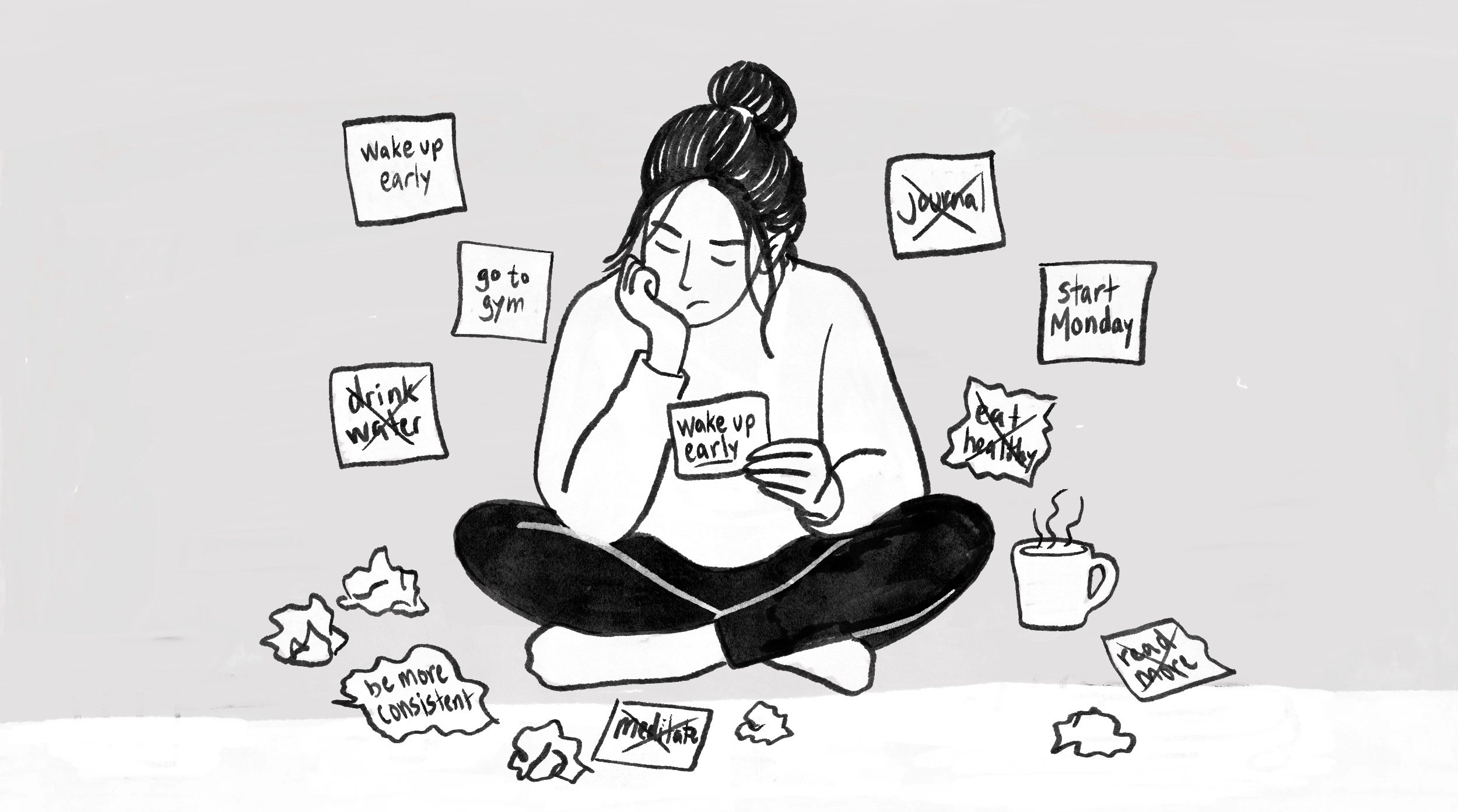
You don’t wake up one day and decide to stop trusting yourself.
It happens quietly.
One missed promise at a time.
You say, tomorrow will be different.
You’ll wake up earlier. Be more consistent. Finally follow through.
And you mean it.
That’s the frustrating part.
Because in the moment, it feels real.
It feels honest.
It feels like this version of you is finally going to change things.
But then tomorrow comes.
You hit snooze.
You push it off.
You tell yourself you’ll do it later.
And later never really comes.
Now it’s not just about a missed habit.
It’s heavier than that.
Because every time it happens, a question starts getting louder:
Why can’t I just do what I say I’m going to do?
And over time, that question turns into something more dangerous:
Doubt.
Not in the goal.
In yourself.
This Isn’t About Discipline
If this were a discipline problem, you could fix it by trying harder.
You’ve already tried that.
It didn’t work.
Because the real issue isn’t effort.
It’s trust.
Every time you say you’ll do something and don’t follow through, your brain takes note.
Not dramatically.
Quietly. Repeatedly.
It starts adjusting its expectations of you.
Your word doesn’t mean much.
You probably won’t do it anyway.
So the next time you set a goal, part of you hesitates.
Not loudly.
Just enough to slow you down.
That’s why it feels harder every time you “start again.”
You’re not just building habits.
You’re trying to build on top of broken self-trust.
And that never holds.
So the real question isn’t how do I become more disciplined?
It’s:
Why do I keep breaking my own word?
Why You Keep Breaking Promises to Yourself
This isn’t random.
It’s patterned.
And once you see the pattern, you can stop repeating it.
1. You make promises based on your ideal self
You plan your life around who you wish you were.
Focused. Motivated. Disciplined.
But your life is lived by who you actually are on a random Tuesday night.
Tired. Distracted. Not in the mood.
That gap?
That’s where your promises go to die.
You don’t fail because you’re incapable. You fail because your plan requires a version of you that doesn’t exist consistently.
2. You try to change everything at once
New routine.
New habits.
New mindset.
It feels productive.
It’s not.
It’s overload.
So when you fall short, it doesn’t feel like adjustment.
It feels like failure.
And instead of scaling down, you quit entirely.
All-or-nothing thinking guarantees you end up with nothing.
3. You rely on feeling ready
You wait for motivation.
For clarity.
For the “right moment.”
But those are unstable conditions.
So your consistency becomes unstable too.
If you only show up when you feel like it, you’ll only be consistent when life is easy.
4. You don’t notice the moment you check out
You think the failure happens when you skip the habit.
It doesn’t.
It happens earlier.
In a small, quiet moment:
“I’ll do it later.”
“It’s not a big deal.”
That’s the breaking point.
And most of the time, you let it pass without noticing.
You don’t break promises in big moments. You break them in small, ignored ones.
5. You’ve normalized not keeping your word
After enough repetition, something shifts.
You stop expecting yourself to follow through.
You still set goals.
You still make plans.
But deep down?
You don’t fully believe yourself anymore.
And that’s the real problem.
The issue isn’t that you fail sometimes. It’s that failure has started to feel like your pattern.
Once you see this clearly, something changes.
You stop blaming yourself.
And start fixing the actual problem.
Because this is fixable.
How to Start Rebuilding Trust With Yourself
You don’t rebuild trust by going harder.
You rebuild it by becoming consistent.
Not impressive.
Not perfect.
Consistent.
Because trust isn’t built on intensity.
It’s built on proof.
Small proof. Repeated.
Step 1: Lower the standard
Your goals aren’t too small.
They’re too big for your current consistency.
So shrink them.
Ask yourself:
What would I still do on my worst day?
That’s your starting point.
Consistency at 20% beats inconsistency at 100%. Every time.
Step 2: Stop overpromising
Before you commit, ask:
Am I actually going to do this? Or do I just like the idea of it?
Be honest.
Adjust until it’s a real yes.
Every kept promise builds trust. Every broken one reinforces doubt. Choose carefully.
Step 3: Catch the moment you start to slip
This is everything.
The moment you feel yourself pulling away — pause.
Don’t quit.
Scale down.
Planned 30 minutes? Do 5.
Planned a full routine? Do the first step.
You’re not trying to win the day. You’re trying to keep your word.
Step 4: Track follow-through, not perfection
At the end of the day, ask:
Did I do what I said I would do?
Yes or no.
That’s it.
Self-trust is built on honesty, not performance.
Step 5: Expect it to feel uncomfortable
Following through might feel… off.
Not because it’s hard.
Because it’s new.
You’re used to negotiating with yourself.
Now you’re not.
Discomfort isn’t a warning sign. It’s a transition phase.
Step 6: Let small wins matter
Your brain doesn’t trust your plans.
It trusts your actions.
So make the small ones count.
Small promises kept daily will change your identity faster than big promises kept occasionally.
And this is where things start to shift.
Not dramatically.
But reliably.
What This Looks Like Over Time
At first, it feels almost pointless.
Too small to matter.
But it does.
Because slowly, something changes:
You hesitate less.
You follow through more.
You stop doubting every plan you make.
And one day, without realizing when it happened, you think:
I actually trust myself again.
Not because you said you would change.
Because you proved it.
Final Thought
You don’t need a new personality.
You don’t need more motivation.
You need evidence.
Proof that when you say something, you mean it.
Because right now, the problem isn’t your ability.
It’s that you no longer expect yourself to follow through.
And the only way to fix that is simple:
Keep your word.
One small promise at a time.