Why You Keep Procrastinating When You Already Know What to Do (And How to Finally Start)
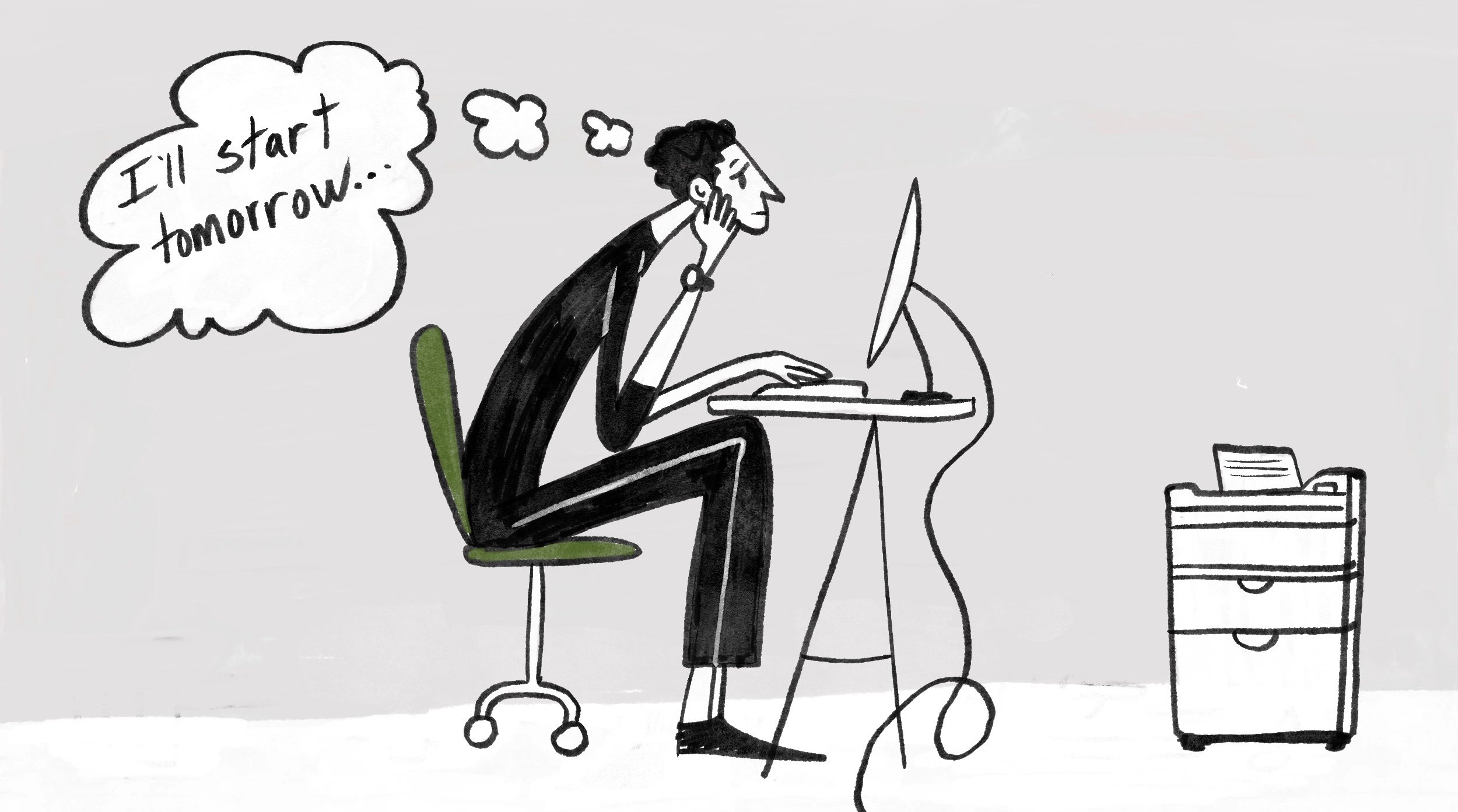
You already know what you're supposed to do.
That's the part that makes it worse.
It's not a mystery. There's no missing information. You don't need another video, another system, another expert telling you the thing you already understand.
You know the next step.
And you're still not taking it.
So you sit there.
You open the laptop and open something else instead.
You tell yourself you'll start after this one small thing.
You do the small thing.
Then another.
And somehow the day quietly empties out, and the one thing you actually meant to do is still sitting there, untouched, exactly where you left it.
You go to bed thinking, tomorrow.
And a part of you already knows.
This Isn't About Laziness
Here's the thing nobody tells you.
Lazy people don't feel bad about not doing things.
You do.
You feel it all day. That low background hum of I should be doing that. The task following you from room to room. The guilt that makes resting feel like stealing.
That's not laziness.
Laziness is indifference.
What you have is the opposite of indifference. You care so much that you've frozen.
So let's stop using that word.
Because if you've been telling yourself you're lazy, you've been trying to solve the wrong problem. You've been trying to fix a motivation issue.
But you're not actually short on motivation.
You wouldn't feel this bad if you didn't care.
The real issue is that starting has become emotionally expensive.
You're not avoiding the task.
You're avoiding a feeling.
You don't procrastinate because the task is hard. You procrastinate because starting it makes you feel something you'd rather not feel.
Why You Keep Putting It Off
This isn't random.
It's patterned.
And once you can name the pattern, you stop blaming your character and start fixing the actual mechanism.
1. You're waiting to feel ready
You're not refusing to start.
You're waiting.
Waiting to feel motivated. Waiting for the right headspace. Waiting until you have a clear stretch of time and the energy to match it.
It sounds reasonable.
It's a trap.
Because "ready" is a feeling, and feelings don't show up on schedule. You can't summon them. You can only wait for them.
So waiting to feel ready means handing the start date to your mood.
And your mood is not reliable.
If you only start when you feel like it, you'll only ever start when life is already easy.
2. The task is too big in your head
You're not looking at the next step.
You're looking at the whole thing.
The entire project. The full workout plan. The complete, finished version of the thing, all at once, sitting there enormous and unfinished.
No wonder you can't move.
You're not avoiding a task.
You're avoiding a mountain you built in your own head.
The actual next step (open the document, put on the shoes, write one sentence) is tiny.
But you can't see it, because the mountain is in the way.
You're not overwhelmed by the work. You're overwhelmed by the size of it in your imagination.
3. You've tied starting to your self-worth
This is the quiet one.
Somewhere along the way, the task stopped being just a task.
It became a test.
If you do it well, you're capable. If you do it badly, maybe you're not. So starting now means risking proof that you're not who you hoped you were.
And not starting?
Not starting keeps the possibility alive.
As long as you haven't tried, you haven't failed.
So you protect yourself by stalling.
It feels safe.
It's the most expensive kind of safe there is.
When starting feels like a verdict on who you are, your mind will protect you by never letting you start.
4. Avoiding it actually feels good, for a second
Here's the part that keeps the loop spinning.
The moment you decide I'll do it later, you feel relief.
Real relief.
The pressure lifts. The dread backs off. For a few minutes, you feel lighter.
Your brain notices that.
And your brain learns: avoiding this makes the bad feeling go away.
So it does it again. And again. Every time the discomfort rises, avoidance is right there, offering the same little hit of relief.
You're not weak.
You're being rewarded for stalling.
Procrastination isn't a failure of willpower. It's a habit your brain repeats because it works, for about five minutes.
5. You confuse thinking about it with doing it
You've thought about this task a hundred times.
You've planned it. Worried about it. Rehearsed it in the shower. Made mental lists of how you'll finally get to it.
And all that thinking feels like effort.
It's exhausting, honestly.
So at the end of a day spent thinking about the thing, it feels like you've been working on it.
You haven't.
You've been circling it.
And circling something for hours is far more draining than just doing it for twenty minutes.
Thinking about the task is not progress on the task. It's just a heavier way of avoiding it.
Once you see these clearly, something loosens.
Because none of them are about being broken.
They're about a system running on autopilot.
And systems can be changed.
How to Start Before You Feel Like It
You don't beat procrastination by waiting to feel different.
You beat it by lowering the cost of starting until starting is easier than avoiding.
That's the whole game.
Not more pressure.
Less friction.
Step 1: Shrink the start until it's almost silly
Don't decide to "work on the project."
Decide to open the file.
That's it. That's the whole commitment.
Not finish. Not make progress. Just open it and look at it.
The point isn't the file. The point is that opening the file is so small your brain doesn't bother defending against it. There's nothing to dread. There's no verdict in opening a document.
And nine times out of ten, once it's open, you keep going.
But even if you don't, you started.
You're not trying to do the task. You're trying to lower the doorway until you can't help but step through it.
Step 2: Separate starting from finishing
You keep refusing to start because some part of you thinks starting means committing to finishing.
It doesn't.
Give yourself full permission to start and stop.
Work for ten minutes, then quit if you want.
Take the first step and walk away.
When starting no longer drags the entire finish line behind it, it stops feeling so heavy.
Let starting be free. You can always decide about finishing later.
Step 3: Make "bad" allowed
Part of why you can't begin is that you're quietly aiming for it to be good.
So aim lower.
Write the bad first sentence. Do the sloppy version. Make the mediocre attempt.
You can fix bad.
You can't fix blank.
A messy start gives you something to work with. A perfect start gives you something to wait for forever.
You can edit a bad page. You can't edit a page you were too scared to write.
Step 4: Catch the swap
Watch for the exact moment you reach for the easier thing.
It's small.
You open the laptop, feel a flicker of resistance, and your hand drifts to your phone instead.
That flicker is the whole battle.
Not later, when you notice the day is gone. Right there, in that half-second.
When you feel it, pause. Don't force the whole task. Just go back to Step 1, the silly-small start.
You don't lose the day in big moments. You lose it in tiny swaps you never noticed making.
Step 5: Give yourself a starting ritual
You don't need motivation if you have a cue.
Pick one small, repeatable action that means now we begin. Fill the same cup of water. Put on the same playlist. Sit in the same chair. Set a timer for ten minutes.
Do it every time, until the ritual itself pulls you in.
Over time, the cue does the work your willpower used to fail at.
Motivation is unreliable. A cue you repeat is not.
Step 6: Let momentum carry what motivation never could
Here's the secret nobody waiting for motivation ever learns.
Motivation doesn't come before action.
It comes after it.
You don't feel like starting, so you start small, and a few minutes in, you feel a little pull to keep going. The feeling you were waiting for arrives. But only because you moved first.
You were doing it backwards your whole life.
You were waiting at the bottom of the stairs for the energy to climb.
The energy was always on the third step.
You don't wait to feel like it, then act. You act, and the feeling catches up.
What This Actually Looks Like
Picture the email you've been avoiding.
You know the one. It's been sitting in your head for four days. It's not even a hard email. A few sentences, maybe an apology, maybe a question you don't love asking.
But every time you think about it, your stomach tightens, and you decide not right now.
So it grows.
By day three it's not a quick reply anymore. It's a Thing. It has weight. You've thought about it so many times it feels like you've half-written it, but the inbox is still empty.
Here's the version where you get free of it.
You don't sit down to "deal with the email."
You sit down to open a blank reply and type the greeting. That's all. Just the name and a comma.
That's so small there's nothing to dread.
And once the greeting is there, the next line comes easier than you expected, because the hardest part was never the writing.
It was the starting.
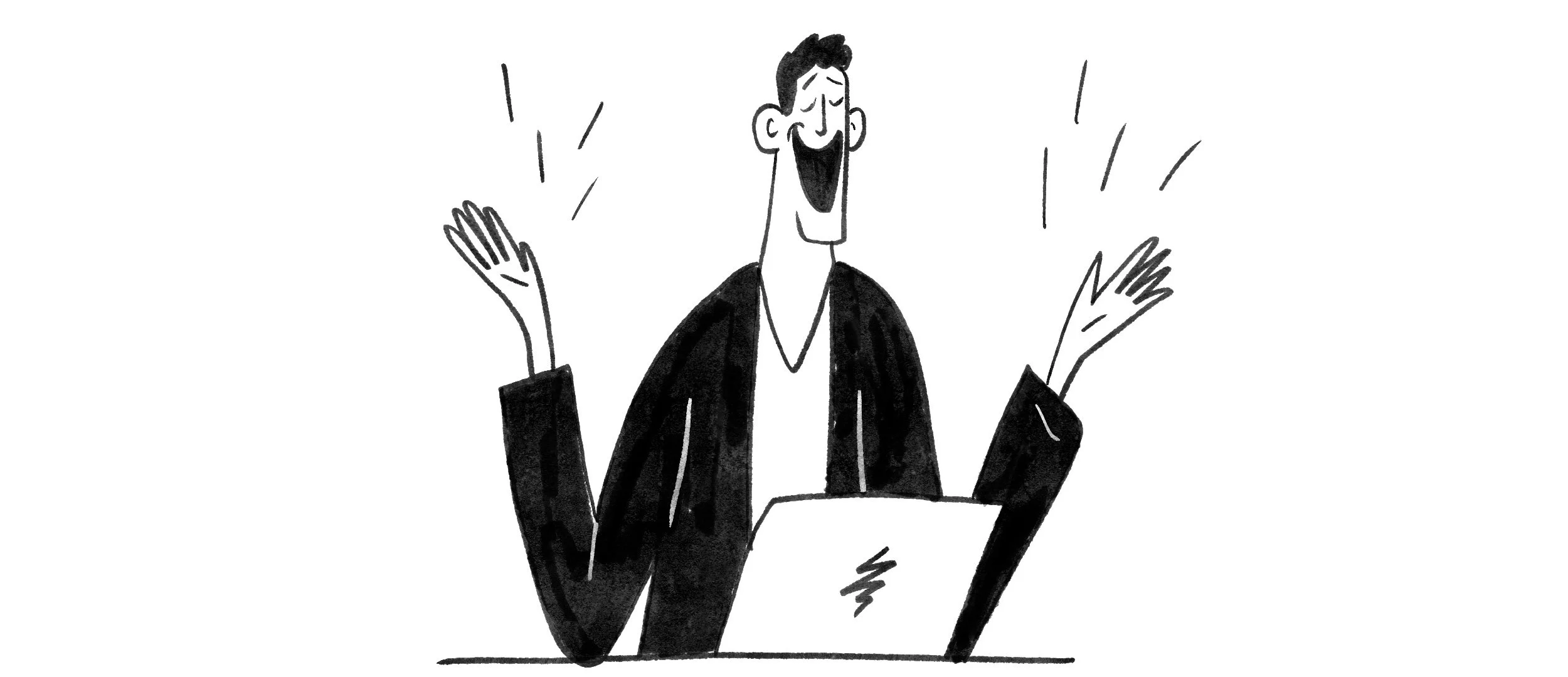
Two minutes later it's sent.
And you feel the thing you always feel afterward: that was so much smaller than I made it.
It always is.
The task was never the mountain.
The waiting was.
What This Looks Like Over Time
At first it feels almost too small to count.
Open the file. Write the bad sentence. Ten minutes, then stop.
But something quietly shifts.
The task stops being a mountain.
The dread gets smaller because you've taught yourself that starting doesn't hurt the way you feared.
And the thing you used to put off for days?
You start reaching for it before the dread even has time to build.
Not because you found discipline.
Because you stopped making starting so expensive.
And here's what surprises most people.
The tasks themselves don't get easier.
You just stop fighting yourself before you begin them. The wall you used to hit, the one made of dread and waiting and not yet, slowly stops being there.
You still won't always feel like starting.
You'll just stop letting that decide whether you do.
Final Thought
You were never lazy.
You were stuck in a loop that rewarded you for waiting and punished you for caring.
The way out isn't more pressure.
It's a smaller first step than you think you're allowed to take.
So make the start ridiculous.
Open the file.
Write the bad sentence.
Do the version that doesn't count.
Because the version that doesn't count is the only one that ever leads to the version that does.
You don't need to feel ready.
You just need to begin badly, on purpose, before your mind talks you out of it.
Start small enough that you can't say no.