How to Build a Realistic Morning Routine When You're Not a Morning Person (The 10-Minute Version)
We all know the video.
She's up at 5:00. It's still dark. There's lemon water, there's a green juice, there's a journal with actual handwriting in it. Twenty minutes of pilates. Skincare with about nine steps. She's outside getting sunlight, she's made the bed with the little decorative pillows, she's read ten pages, and it is 7:15am.
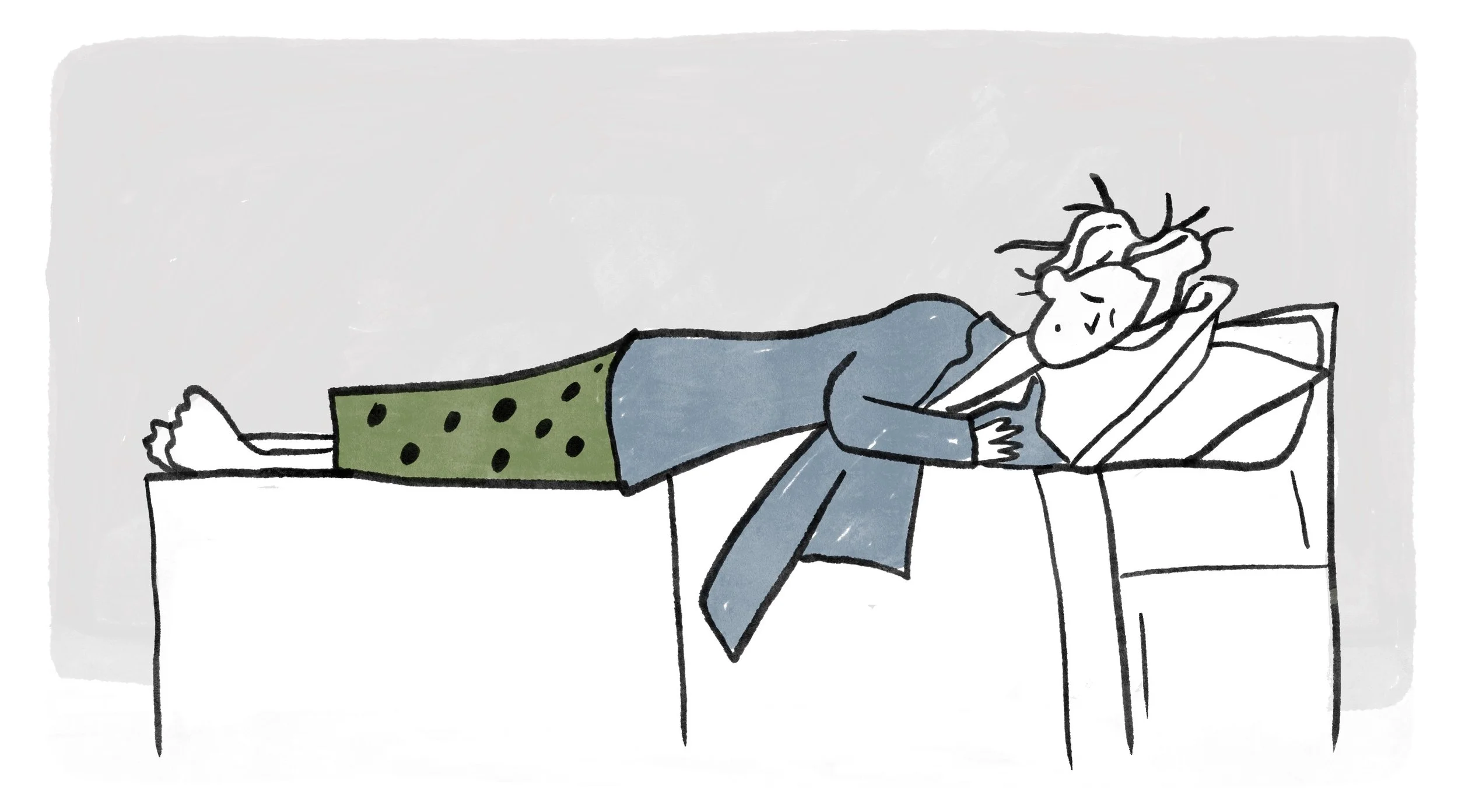
And we watched it in bed. At 6:52. With the alarm already snoozed twice.
So this September, we decided we'd try a version of it.
Day one, honestly? Incredible. We did most of it. We felt like someone else entirely.
Day two we did about half.
Day three we skipped the journal, drank the coffee instead of the lemon water, and told ourselves that still counted.
Day four we slept through the alarm, and by the time our feet hit the floor we already felt like we'd lost. Before anything had even happened. Before 7am, on a Thursday, we were behind.
So the routine went in the drawer with all the other ones, and we drew the same conclusion we always draw. I'm just not a morning person.
Let's not do that.
Because the problem was never that we're not morning people.
The problem is that we were handed a morning routine designed for someone whose entire job is having a morning routine.
That Routine Is Content. It's Not a Morning.
Let's be clear about what we're actually looking at, because it changes everything about how those videos feel.
A lot of what we're comparing ourselves to is filmed. Batched. Sometimes shot across three days and stitched into one perfect morning. Often by someone whose actual job is producing that footage, which means the routine isn't squeezed in before work. The routine is the work.
So when our ordinary Wednesday loses to that, of course it does.
We're not comparing our morning to her morning. We're comparing our morning to her highlight reel, filmed on the one day the light was good.
And even setting the camera aside, a 5am morning with nine things in it genuinely does work for some people. People with slack in their schedule, a commute measured in minutes instead of an hour, a body that wakes up cheerful for reasons nobody has ever adequately explained.
Good for them. Truly.
It has nothing to do with whether we can build a morning that works.
The standard we keep failing isn't a high standard. It's someone else's circumstances, filmed nicely.
Why the Aesthetic Morning Routine Keeps Collapsing on Us
This isn't about discipline. It's structural. Five reasons, and most of them will look familiar.
1. It was built for a morning with nothing else in it
Count what's actually in that video. Wake at five. Lemon water. Green juice. Twenty minutes of pilates. Nine steps of skincare. Journal. Ten pages of a book. Bed made properly. Ten minutes outside in the sun.
That's nine separate activities, and written out like that, it's roughly ninety minutes of morning before a single other thing in her day begins.
Now count what's actually in ours. A commute that eats forty minutes. A first meeting at 8:30, which means we're really getting up at 7:15 no matter what the video says. A dog who needs to go out before anything else in the world happens. A shower we can't skip. Or just the plain fact that we got home at 9:40 last night and sleep is going to win this negotiation.
The routine didn't fail. It was never going to fit in the container.
A routine that needs ninety minutes we don't have isn't ambitious. It's just the wrong size for the mornings we actually have.
2. It's nine new habits stacked into our worst hour
Look at what that routine is really asking of you.
Wake up earlier. Don't touch your phone. Hydrate differently. Move your body. Write in a journal. Do the skincare. Read. Make the bed properly. Get outside.
That's nine new habits. Starting the same day. In the one hour when we have the least patience, the least energy, and the least caffeine in the entire day.
Nobody could run that. It's not a personal failing.
Nine new habits at once isn't nine times harder than one. It's the point where the whole thing gets abandoned by Thursday.
3. It makes "being a morning person" the entry fee
The routine assumes we'll become people who love mornings first, and then the habits follow.
That's backwards, and it's expensive. Now we're not just building a habit, we're waiting on a personality transplant that may never arrive.
We don't have to like mornings. Plenty of people with good mornings still find them mildly offensive. They just have two small things they do anyway.
We don't need to become morning people. We need two things we can do while still being ourselves, groggy and unimpressed.
4. It's aesthetic-dependent
Notice how much of it needs staging.
The clean counter. The ceramic mug. The matching set. The good light. The kitchen without last night's pan still in the sink.
So on a normal Wednesday, when the counter is covered and the good mug is in the dishwasher, the routine doesn't just feel harder. It feels wrong, like we're doing a bad version of it.
And things that feel like a bad version get quietly dropped.
A routine that only works when the kitchen is clean isn't a routine. It's a photoshoot.
5. There's no version of it for a bad morning
This is the one that actually kills it.
There's no instruction in that video for the morning after four hours of sleep. No shortened version for the day we wake up already sick, or the day we oversleep because the phone updated itself overnight, or the morning we're in a hotel room with no kitchen and a 9am that can't move.
So the first bad morning has nowhere to go except skip the whole thing. And then we're not doing the routine anymore. We're recovering from it.
Any routine without a bad-morning version is a routine with an expiration date.
Your Permission Slips
So before we build anything, here's what you're allowed to put down. Read these as literally as you like. Screenshot them, whatever helps.
Permission to have a boring morning. No aesthetic. No theme. Nothing that would film well.
Permission to keep your alarm exactly where it is. 6:50 is a time. You do not owe anyone 5am.
Permission to never drink lemon water. It's water. With a lemon in it. You're fine.
Permission for your routine to be four minutes long. Four minutes you do every day beats ninety minutes you did once in September.
Permission to look at your phone. We'll put one small guardrail on it later, but nobody is confiscating anything.
Permission for your morning to start at 9:15. If that's when your day actually opens up, that's your morning. The clock doesn't rank you.
Permission to skip the parts you hate. If journaling makes you feel like you're doing homework, journaling is not for you. Cross it out. Keep the one part that feels like a small treat.
That's not lowering the bar.
That's putting the bar somewhere your real life can reach it, first thing, half awake, on a Tuesday.
The 10-Minute Morning That Survives a Wednesday
Here's the whole build. Five steps, and you can set it up tonight in about six minutes.
Step 1: Pick two things. Not nine.
One for your body, one for your head. That's the entire architecture.
For your body, something like a full glass of water. Standing outside for two minutes. Ten slow stretches on the bedroom floor. A walk to the end of the street and back.
For your head, sit with your coffee and look out a window without your phone. Take three slow breaths before you stand up. Or do the one I actually use, which we'll get to in a minute, and check the app you like once, then put it down until tonight.
Two. That's it. Everything else you were going to include goes on a list called maybe in November.
Two small things you keep will do more for your mornings than nine you rotate through and quit.
Step 2: Attach them to something you already do
Don't go hunting for a new empty slot in your morning. There isn't one. That's exactly why the last routine died.
Staple your two things to something that already happens whether or not you're motivated.
While the coffee brews, I stand outside.
After I brush my teeth, I do the ten stretches.
Before I put my shoes on, I drink the full glass of water.
The thing you already do is the trigger. You're just adding a small passenger to a train that leaves the station anyway.
You don't need more morning. You need to attach the new thing to a morning that already exists.
Step 3: Cap each one at three minutes
Set the actual limit. Three minutes maximum, each.
I know that sounds too small to matter. It isn't, and here's why. Three minutes is short enough that you can't build a story around skipping it. You can't claim you didn't have time for three minutes. The excuse has nowhere to stand.
And most days you'll go longer on your own, because the hard part was starting, and you already started.
Make the first step almost too easy, and you remove the only real barrier, which is the deciding.
Step 4: Decide the 60-second version now, while you're calm
Right now, before anything goes wrong, write down what your two things look like on the worst realistic morning. Four hours of sleep. Waking up sick. Traveling. A 7:30 call that appeared on your calendar overnight.
If your thing is standing outside for two minutes, the 60-second version is opening the door, standing in the doorway, and taking one breath.
If your thing is ten stretches on the floor, the 60-second version is two stretches, sitting on the edge of the bed, still under the blanket if you want.
If your thing is a full glass of water, the 60-second version is a few swallows from whatever glass is closest.
If your thing is coffee at the window without your phone, the 60-second version is thirty seconds at the window with the phone face down on the counter.
Call it the floor. The floor is not the lesser version of you.
The floor is why the routine is still alive eight weeks from now, on the Thursday you got four hours of sleep, and the week your workload doubles with no warning, and the morning you wake up in a hotel with none of your stuff and a call in twenty minutes. Those mornings are coming. They come for everyone. The only question is whether your routine has somewhere to go when they arrive, or whether it just stops, and takes the identity with it.
A routine with a floor bends on those days. A routine without one breaks, and then you're back to the drawer.
Decide your bad-morning version while you're calm, because in the moment, the guilt will decide for you.
Step 5: Cross out the rest, out loud
Go back to the routine you were trying to copy. Say the parts you're deleting out loud, like a person announcing something at a small meeting.
I am not doing lemon water. I am not journaling three pages. I am not doing pilates before 8am. I am not making the bed with the decorative pillows.
This step sounds silly and it's the one that actually works, because the leftover guilt lives in the parts you never officially dropped. They just hang around in the back of your head as evidence of what you're not doing.
Delete them properly and you get the mental space back.
Crossing something off on purpose is not quitting. It's the difference between a short routine and a long routine you're failing.
The one-minute bonus: move something to the night before
Optional, and unreasonably effective for how little it costs.
Put out the shoes. Fill the water glass. Set the mug next to the kettle. Put the book on top of your phone.
Sixty seconds of tonight makes tomorrow's version nearly automatic, and tonight-you is generally in a much better negotiating position than 6:52am-you.
The easiest way to improve your morning is to leave something ready for yourself the night before.
What This Actually Looks Like
Mine is three things and it is deeply unimpressive.
First, Bandit and Malleus get breakfast and fresh water. They finish whatever's in the bowls overnight, so this is not optional and it is not inspiring. It's also the single most reliable trigger in my entire day, which makes it the perfect thing to hang everything else on.
Then, iced coffee. Yes, iced. Yes, in September. We're not discussing it.
Then I check Instagram once, right there with the coffee, and that's my check for the day. I don't open it again until the evening.
That last one probably sounds like the weakest part. It's the one that changed the most. Because the phone was never the problem; the problem was checking it eleven times before lunch and letting other people's Tuesdays set the tone for mine. Giving it one honest window in the morning meant I stopped pretending I'd quit it, and stopped paying for it all day.
That's the whole routine. Under ten minutes. Nothing about it would survive being filmed.
Some mornings I stand outside with the coffee for fifteen minutes and it's lovely. Some mornings it's ninety seconds in slides, holding the cup, squinting, thinking about nothing. Both count identically.
What it gave me surprised me, because it wasn't productivity. It was just the feeling of having started the day on purpose instead of being chased into it. There's a real difference between opening your eyes and immediately being behind, and having three minutes that were yours before anything got asked of you.
That's the entire benefit. It's enough.
And on the mornings I skip it? I do the floor version the next day and I don't build a whole narrative about it, which is a skill of its own, and one I've written about separately.
A Quick Gut-Check Before You Build Yours
Two questions, sixty seconds.
Which part of that routine did I actually want, and which part did I just want to be the kind of person who does?
Keep the first kind. The second kind will never stick, because the goal was never the activity. It was the feeling of being someone who has it together, and no amount of lemon water is going to deliver that.
What would make the first ten minutes of tomorrow feel 10% less rushed?
Not better. Not more productive. Less rushed. Whatever answers that question is your actual morning routine, and it might just be putting your keys somewhere findable.
Remember,
September does this every year. Everyone's rebuilding their routines at once, and the internet fills up with people doing nine beautiful things before 8am.
We don't have to enter that competition. There isn't a prize and half the entrants are being paid.
Pick two things. Attach them to your coffee. Cap them at three minutes. Decide the 60-second version now, before you need it. Cross out everything else, out loud, with feeling.
Then have a boring, sustainable, mildly grumpy morning. And have it again tomorrow.
That's the version that's still going in November.
Boring, sustainable, and actually ours. That's the one that counts.