
How to Get Back on Track After You Miss a Day (Without Starting Over)
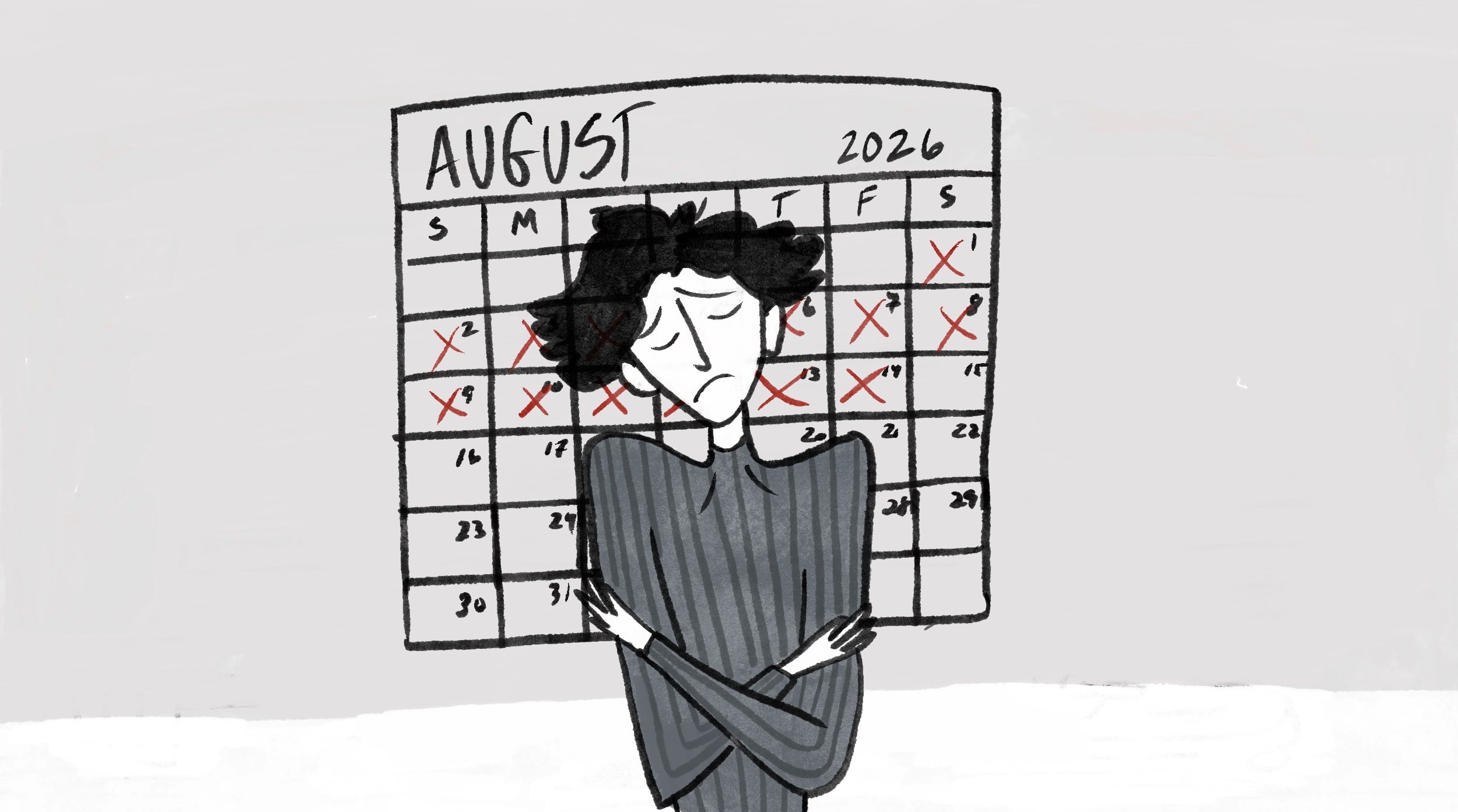
We were doing so well.
A week straight. Maybe two.
The habit was actually starting to feel like ours. We’d catch ourselves doing it without the usual fight. We felt something close to proud.
And then a day happened.
Not a dramatic one. Just life. We were tired. Something ran long. We forgot until it was too late, or we remembered and thought, we’ll do it tomorrow, one day won't hurt.
So we skipped it.
And here's the part that actually matters. The skip itself was fine.
One missed day never killed a habit.
But that's not where it ended.
Because the next morning, something felt off. The streak was broken. The clean little run of days had a gap in it now. And a quiet voice showed up:
Well, I already messed it up.
So we skipped again.
Then the day after that, the habit felt heavier. Skipping it for the third time barely registered.
By day five, the thing we'd built for two weeks was just… gone.
And we were back where we always end up, wondering why we can never make anything stick.
The Missed Day Was Never the Problem
Let's be clear about what actually happened there.
We didn't lose the habit on the day we skipped.
We lost it in the days after.
One missed workout doesn't undo our progress. One skipped page doesn't erase the book. One night we forgot doesn't delete two weeks of showing up.
The math of it is forgiving.
Miss one day out of fourteen and we still did the thing thirteen times. That's not failure. That's a really good run with one gap in it.
But we didn't treat it like one gap.
We treated it like a verdict.
The skip became proof. Proof that we’re inconsistent. Proof that this always happens. Proof that we’re just not the kind of person who follows through.
And once a missed day means all of that, of course we spiral.
We’re not reacting to the skip anymore.
We’re reacting to the story about the skip.
A missed day costs us almost nothing. The story we tell ourselves about it costs us the entire habit.
Why One Missed Day Takes You Down
This isn't a willpower problem.
It's a pattern. And like any pattern, once we can see it, we can interrupt it.
1. You made the streak the whole point
Somewhere along the way, the goal stopped being the habit.
It became the streak.
The unbroken run. The number going up. The satisfying chain of perfect days.
And streaks have a fatal flaw.
They can only ever be broken once.
The moment you miss, the perfect record is gone. And if perfect was the point, there's nothing left to protect. So you stop trying.
When the streak is the prize, a single miss turns the whole thing into a loss.
2. You're running on all-or-nothing
This is the engine underneath the spiral.
If you can't do it perfectly, you don't want to do it at all.
Full routine or no routine. Every day or pointless. On the wagon or completely off.
So a missed day doesn't read as "slightly less than ideal."
It reads as "ruined."
And ruined things get abandoned.
All-or-nothing thinking turns one small miss into a reason to quit the whole thing.
3. You make the miss mean something about you
You skipped a day.
That's a fact. Neutral. It happens to everyone who's ever built anything.
But you don't leave it as a fact.
You make it a character statement. See, I always do this. I never finish anything. I knew I'd fall off.
And now you're not recovering from a skipped day.
You're carrying the weight of being someone who can't be trusted to follow through.
That's a much heavier thing to come back from.
A skipped day is an event. The moment you turn it into evidence about who you are, it becomes a reason to give up.
4. The guilt makes you avoid the very thing that would fix it
Here's the cruel twist.
After you miss, the habit starts to feel bad.
Looking at the workout clothes, the unread book, the tracker with the gap in it. It all reminds you that you slipped. And reminders of slipping feel like guilt.
So you avoid them.
You avoid the thing that would actually get you back on track, because facing it means facing the miss.
The longer you avoid it, the bigger the guilt grows, and the harder it gets to go back.
You don't avoid the habit because you're lazy. You avoid it because it reminds you that you fell off, and that feeling is what you're really running from.
5. You wait to "start fresh" instead of just continuing
This is the final nail.
Instead of picking the habit back up today, you decide to start over.
Monday. The first of the month. After this busy stretch. Some clean, fresh starting point where you can begin again, properly.
It feels responsible.
It's a trap.
Because waiting to "start fresh" means choosing to stay stopped until then. You throw away every day in between. And worse, you teach yourself that progress only counts if it's perfect and unbroken.
It never is.
You don't need a fresh start. You need to continue from a slightly messy middle, which is where every real habit actually lives.
Once you see this, the missed day shrinks back to its actual size.
It's small.
It was always small.
The only thing that made it big was you.
How to Bounce Back
Getting back on track isn't about willpower or punishment.
It's about catching the spiral before it catches you.
Here's how.
Step 1: Make your only rule "never miss twice"
Forget the perfect streak.
Replace it with one rule that's almost impossible to break: never miss the same thing two days in a row.
Miss once? Fine. Allowed. Human.
But not twice.
Because one miss is an accident. Two in a row is the start of a new pattern. The not-doing pattern. And that's the one you can't let take hold.
This single rule changes everything. It gives you room to be imperfect without giving you room to quit.
One missed day is a slip. Two in a row is the beginning of the end. Protect the second day, not the perfect record.

Step 2: Separate the skip from the story
When you miss, you'll feel the story rising. I always do this. I've blown it.
Catch it.
Then say the plain version instead: I skipped one day. That's all that happened.
No character verdict. No prediction about your future. Just the small, neutral fact of one missed day.
You can't always stop the skip.
You can almost always stop the story.
The skip is a fact you can recover from. The story is a choice that decides whether you do.
Step 3: Shrink the comeback
Your instinct after missing is to make up for it.
Do double. Two workouts. The pages you missed plus today's. Punish yourself back into balance.
Don't.
Doubling makes the comeback harder than the habit ever was, which makes you avoid it more.
Do the opposite. Make getting back as small as possible. The minimum version. The five-minute version. Whatever is so easy you can't talk yourself out of it.
The goal isn't to repay the missed day.
The goal is to simply be doing the thing again.
You don't bounce back by doing more. You bounce back by doing the smallest possible version, today.
Step 4: Get back in fast, same day if you can
Time is not on your side here.
The longer the gap, the bigger the story grows and the heavier the return feels. A one-day gap is easy to close. A five-day gap feels like starting a new life.
So move fast.
Notice you skipped this morning? Do the tiny version tonight. Realize at the end of the day? Do it first thing tomorrow.
Speed matters more than size. A two-minute comeback today beats a perfect comeback you keep postponing.
The faster you return, the smaller the gap stays. And the smaller the gap, the easier it is to step back over.
Step 5: Change what you're counting
Stop counting your streak.
Start counting your return rate: how quickly you get back after a miss.
Because that's the real skill. Not never falling off. Everyone falls off. The people who keep their habits aren't the ones who never miss.
They're the ones who miss and come back fast.
So make that the thing you're proud of. Not "I went 30 days perfect." But "I've never let a miss turn into two."
Consistency isn't a perfect record. It's how quickly you come back after an imperfect one.
Step 6: Plan for the miss before it happens
You already know you're going to miss a day eventually.
So decide what you'll do about it now, while you're calm. Not in the guilty fog afterward, when the story is loudest.
Write yourself one line:
If I miss a day, I do the two-minute version the very next day, no matter what.
That's it. A pre-made decision, waiting for you.
When the miss comes, you don't have to find the willpower or fight the story. You just follow the plan you already made.
The best time to decide how you'll recover is before you ever need to, because in the moment, the story will decide for you.
What This Actually Looks Like
Say you've been reading ten pages a night for two weeks.
Then Thursday gets away from you. Long day, you fall asleep on the couch, no reading.
In the old version, Friday morning you feel the gap, think well, the streak's dead, skip again "because what's the point now," and by the next week the book is back on the shelf, bookmark untouched.
Here's the version where you catch it.
Friday you notice the miss. You feel the story start. I never finish books. Then you name the plain fact instead: I missed one night. That's all.
You don't try to read twenty pages to make up for it. You read two. Just two, before bed, because two is impossible to argue with.
The streak is broken, sure.
But the habit isn't.
You missed once, came back the next day, and never let it become twice.
A month later, you've finished the book. Not because you read perfectly, but because you got good at the only thing that actually matters.
Coming back.
Remember,
We were never going to do it perfectly.
Nobody does.
The missed day was always coming, and it was never the thing that would break us.
What breaks us is the spiral after: the story, the guilt, the all-or-nothing collapse, the waiting for a fresh start that erases everything we’d already built.
So next time we slip, don't ask how we let it happen.
Ask how fast we can get back.
Do the two-minute version. Tonight if you can, tomorrow at the latest. Never let one become two.
Because the goal was never a perfect streak.
The goal was a habit that survives real life.
And real life includes missing.
The ones who keep their habits aren't the ones who never fall.
They're the ones who get back up before the fall becomes the new habit.
That’s you and me.